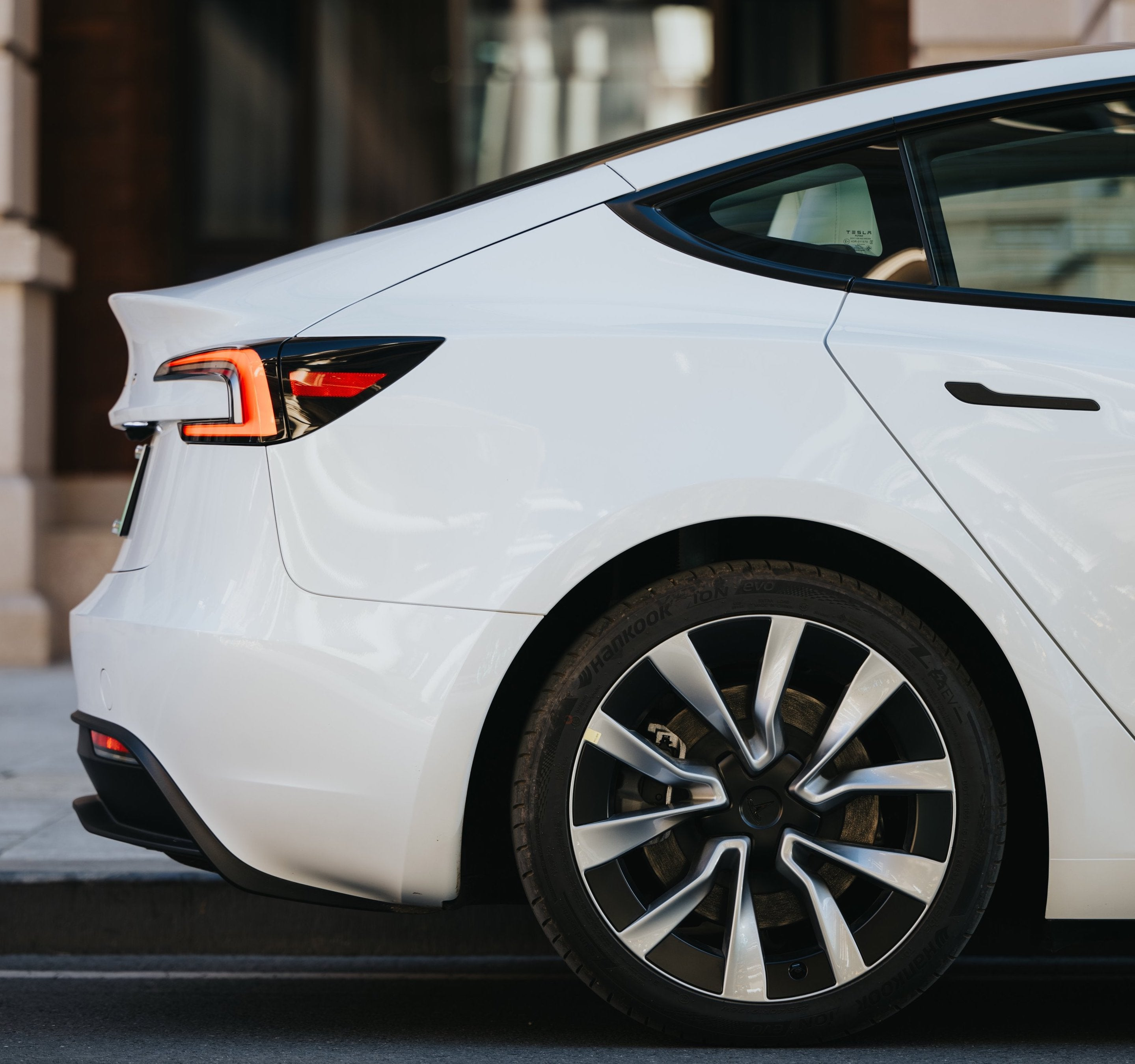
Tesla Model 3 Tires Fitment and How to Order the Correct Part?
Tesla Model 3 tires use a 5x114.3 mm bolt pattern with a 64.1 mm centre bore across every model year and trim. The standard 18-inch wheel takes a 235/45R18 tire, the 19-inch takes a 235/40R19, and the 20-inch Performance setup runs a staggered 235/35R20 front and 275/30R20 rear. Ordering the correct replacement requires matching the tire size to your wheel diameter, confirming the load index meets Tesla's minimum, and verifying the speed rating for your trim. This guide covers every fitment specification, the OEM tires that ship on each wheel option, recommended replacements by category, and a step-by-step process for ordering the right part without second-guessing yourself.
What Tire Sizes Does the Tesla Model 3 Use by Trim and Model Year
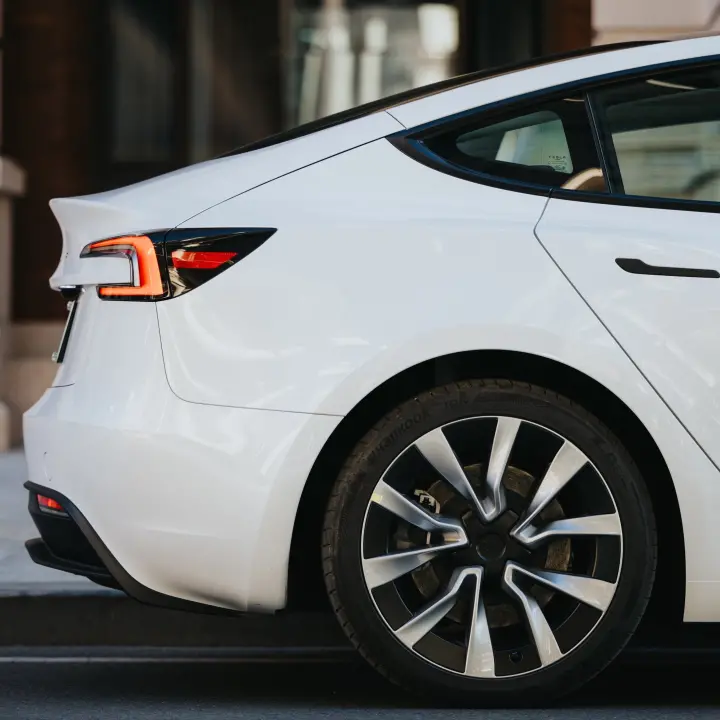
The Tesla Model 3 uses three factory tire sizes depending on which wheel option your vehicle shipped with. The 18-inch Aero wheel (standard on RWD and Long Range trims from 2017 through 2023) and the 18-inch Photon wheel (standard on the 2024+ Highland refresh) both take a 235/45R18 tire. The 19-inch Sport wheel (2017–2023) and the 19-inch Nova wheel (2024+) both take a 235/40R19 tire. The 20-inch Performance wheel (called the Warp on the 2024+ Highland) runs a staggered setup with 235/35R20 on the front axle and 275/30R20 on the rear axle.
The 2024 Highland refresh did not change the tire sizes or the bolt pattern. Tesla redesigned the wheel faces and names, but the underlying fitment specifications stayed the same. A 235/45R18 tire from a 2019 Model 3 Aero wheel fits a 2025 Model 3 Photon wheel identically. This backwards compatibility means replacement tires are widely available across model years, and wheels and tires purchased for an older Model 3 will mount onto a newer one without modification.
| Wheel Option | Diameter | Wheel Size | Offset | Tire Size | Model Years |
|---|---|---|---|---|---|
| Aero / Photon | 18" | 18x8.5J | +40 (legacy) / +38 (Highland) | 235/45R18 | 2017–present |
| Sport / Nova | 19" | 19x8.5J | +40 (legacy) / +38 (Highland) | 235/40R19 | 2017–present |
| Stiletto / Warp (Performance) | 20" | Front: 20x9J / Rear: 20x10J | Front: +34 / Rear: +45 | Front: 235/35R20 / Rear: 275/30R20 | 2018–present |
Sources: Tesla Model 3 Owner's Manual, T Sportline, Unplugged Performance
What Is the Bolt Pattern and Fitment Specification for the Tesla Model 3
The bolt pattern for the Tesla Model 3 is 5x114.3 mm (also written as 5x4.5 inches) across every model year and every trim. The centre bore is 64.1 mm. The lug nut thread pitch is M14x1.5, requiring a 21 mm socket. Tesla specifies a lug nut torque of 129 lb-ft (175 Nm).
These four numbers define whether a wheel physically bolts onto a Model 3. The bolt pattern determines the spacing of the five lug holes. The centre bore determines whether the hub ring seats flush against the wheel's centre hole. A wheel with a larger centre bore than 64.1 mm will mount, but it requires a hub-centric ring to centre the wheel on the hub and prevent vibration at highway speeds. A wheel with a smaller centre bore will not mount at all.
- Bolt pattern: 5x114.3 mm (5x4.5")
- Centre bore: 64.1 mm
- Lug nut thread: M14x1.5
- Lug nut socket size: 21 mm
- Lug nut torque: 129 lb-ft (175 Nm)
- Wheel offset range: +34 to +40 depending on wheel diameter and trim
The 5x114.3 bolt pattern is one of the most common in the automotive industry. This opens an enormous catalogue of aftermarket aftermarket rims for Model 3 owners who want a different look. Any wheel with the correct bolt pattern, an appropriate offset, and a centre bore of 64.1 mm or larger (with hub rings) will bolt onto the car. Brake caliper clearance becomes the constraint on smaller diameters, particularly on the Performance trim where the larger front rotor and four-piston caliper can interfere with 18-inch aftermarket wheels that have thick barrel walls.
What Tires Come Stock on a Tesla Model 3
The tires that come stock on a Tesla Model 3 depend on the wheel size and model year. The 18-inch Aero wheel on pre-Highland models (2017–2023) shipped with the Michelin Primacy MXM4 in 235/45R18. The 18-inch Photon wheel on the 2024+ Highland refresh ships with the Michelin Primacy A/S in 235/45R18. The 19-inch Sport and Nova wheels shipped with either the Continental ProContact RX or the Hankook Ventus S1evo3 in 235/40R19, depending on production date and region. The 20-inch Performance wheels shipped with the Pirelli P Zero in 235/35R20 front and 275/30R20 rear, with some late-2021 and newer builds using the Michelin Pilot Sport All Season 4 instead.
All factory-installed tires carry Tesla's T0 or T1 designation, meaning Tesla co-developed the tire with the manufacturer for optimised rolling resistance, noise reduction, and load handling. The Michelin Primacy MXM4 and Primacy A/S both include acoustic foam bonded to the inner tread surface, which reduces road noise by up to 6 decibels at 200 Hz according to Tesla's support documentation. The Continental ProContact RX uses Continental's ContiSilent foam technology for the same purpose. Pirelli P Zero tires on the Performance trim prioritise dry and wet grip over noise reduction, reflecting the trim's sport-focused priorities.
What Does the T0 or T1 Marking Mean on Tesla Model 3 Tires
The T0 or T1 marking on a Tesla Model 3 tire means the tire was co-developed by Tesla and the tire manufacturer to meet Tesla's specific performance targets. T0 marks the first generation of a co-developed tire. T1 marks the second generation, incorporating updated compounds, construction, or acoustic technology. Tesla works with seven manufacturing partners to produce T-marked tires: Bridgestone, Continental, Goodyear, Hankook, Kumho, Michelin, and Pirelli.
T-marked tires undergo virtual development iterations that combine computer modelling with physical testing before production, according to Tesla's tire support page. This process tunes rolling resistance for maximum range, tread compounds for the instant torque and heavy battery load of an EV, and internal acoustic foam for cabin quiet. Tesla states that T-marked tires can deliver up to 10 percent more range compared to generic aftermarket tires. Tires without the T marking still work safely on a Model 3, provided they match the correct size, carry the required XL load rating, and meet the minimum speed index. The practical trade-off is slightly more road noise and a modest range reduction of 3 to 8 percent.
What Does the Load Index Mean on Tesla Model 3 Tires
The load index on a Tesla Model 3 tire indicates the maximum weight each tire can safely support at a specified inflation pressure. Tesla requires a minimum load index of 98 XL for the 18-inch and 19-inch fitments. The 20-inch Performance front tire carries a minimum load index of 96 XL, and the wider rear tire carries 100 XL.
A load index of 98 means the tire supports up to 750 kg (1,653 lbs) per tire. Four tires at load index 98 support a combined 3,000 kg (6,614 lbs), well above the Model 3's heaviest curb weight of 4,081 lbs for the Performance trim. The XL designation is critical because it indicates the tire uses reinforced internal plies and stiffer sidewalls built to handle higher loads than a standard-load tire of the same size. Standard-load tires in 235/45R18 carry a lower load index and cannot safely manage the Model 3's battery weight of roughly 1,000 to 1,200 lbs sitting under the floor.
When shopping for replacement tires, filter results by the XL designation first. A tire listed without XL or "extra load" in its specifications may mount correctly but will flex excessively, generate heat, and wear unevenly under the Model 3's mass. Every tire recommended later in this guide carries the XL rating as a baseline requirement.
What Is the Difference Between 18-Inch and 19-Inch Tires on a Tesla Model 3
The difference between 18-inch and 19-inch tires on a Tesla Model 3 is sidewall height, ride comfort, road noise, and range efficiency. The 18-inch 235/45R18 tire has a taller sidewall (roughly 106 mm of rubber between the rim edge and the road surface). The 19-inch 235/40R19 tire has a shorter sidewall (roughly 94 mm). That 12 mm of additional rubber on the 18-inch tire absorbs more road imperfections before they reach the cabin, producing a quieter, smoother ride.
The shorter sidewall on the 19-inch tire gives the car a sportier appearance and slightly sharper steering response because the tire deforms less during cornering. That reduced deformation comes at a cost: less cushion over potholes, higher susceptibility to rim damage from curb strikes, and increased road noise transmitted through the thinner sidewall. The overall tire diameter stays nearly identical between the two sizes (roughly 26.3 inches for the 18-inch and 26.4 inches for the 19-inch), so speedometer accuracy and odometer readings remain consistent regardless of which size you run.
Does Wheel Size Affect Tesla Model 3 Range
Yes, wheel size directly affects Tesla Model 3 range. Moving from 18-inch wheels to 19-inch wheels reduces range by approximately 3 to 5 percent. Stepping up to 20-inch Performance wheels reduces range by roughly 7 to 10 percent compared to the 18-inch baseline. On a Long Range Model 3 rated for 350+ miles of EPA range, a 10 percent reduction means 35 fewer miles per full charge.
Larger wheels reduce range for two connected reasons. First, larger wheels are heavier. The stock 18-inch Aero wheel weighs 21.6 lbs without its aero cover, according to T Sportline. The 19-inch Sport wheel weighs 25 lbs. The 20-inch Warp wheel weighs 22.7 lbs in the front and 23.4 lbs in the rear. Heavier wheels increase rotational inertia, forcing the motor to spend more energy accelerating and decelerating the mass at every speed change. Second, the shorter sidewall on a larger wheel increases the tire's rolling resistance because the stiffer construction deforms less elastically against the road surface, converting more kinetic energy into heat.
Tesla's factory aero wheel covers on the 18-inch Aero and Photon wheels reduce aerodynamic drag around the wheel opening. Tesla has stated that removing the aero covers costs a small but measurable amount of range. Owners who prioritise maximum efficiency should stay on 18-inch wheels with aero covers and pair them with a low-rolling-resistance tire.
What Are the Best Replacement Tires for a Tesla Model 3
The best replacement tires for a Tesla Model 3 depend on your wheel size and driving priorities, but the Continental ProContact RX, Michelin Primacy A/S, and Hankook iON Evo AS are the strongest all-season options across 18-inch and 19-inch fitments.
The Continental ProContact RX is the most common OEM replacement because Tesla selected it as original equipment across multiple model years. It features ContiSilent acoustic foam, low rolling resistance, and an even wear pattern tuned for the Model 3's weight distribution. Owners replacing a worn set of factory tires with another ProContact RX will notice zero difference in ride quality, noise, or range, which makes it the simplest choice.
The Michelin Primacy A/S replaced the older Primacy MXM4 as the OEM tire on the 2024+ Highland refresh. It carries updated compound technology and Michelin's acoustic foam, offering improved wet grip and tread life over its predecessor. For owners of pre-Highland Model 3s running 18-inch wheels, the Primacy A/S is a worthwhile upgrade over the older MXM4.
The Hankook iON Evo AS is purpose-built for electric vehicles. Its compound is engineered to spread battery weight evenly across the contact patch, extending tread life on heavy EVs. The iON Evo AS ships as original equipment on the 2025 Juniper Model Y's 20-inch wheel and is available in Model 3 sizes as well. For owners who want an EV-specific tire that was not designed with any gas-car compromises, the Hankook iON Evo AS delivers the most focused approach.
The Michelin CrossClimate 2 earns a separate mention for owners who want all-weather versatility on a single set of tires. It carries the three-peak mountain snowflake (3PMSF) rating for certified snow traction and a 60,000-mile treadwear warranty. The trade-off is slightly more road noise and a modest range reduction compared to EV-specific tires with acoustic foam. For owners in climates with occasional snow who prefer not to swap between seasonal tire sets, the CrossClimate 2 is the strongest one-tire solution.
What Are the Best Winter Tires for a Tesla Model 3
The best winter tires for a Tesla Model 3 are the Michelin X-Ice Snow, the Bridgestone Blizzak WS90, and the Continental VikingContact 7. All three are available in 235/45R18 for the standard wheel and 235/40R19 for the sport wheel, carry the 3PMSF rating, and handle the Model 3's weight without excessive sidewall flex.
The Michelin X-Ice Snow uses a Flex-Ice compound with micro-roughness across the tread blocks that grips ice at the microscopic level. The Bridgestone Blizzak WS90 excels in deep snow and slush with a multi-cell compound that absorbs and disperses water. The Continental VikingContact 7 produces the quietest cabin of the three, an important factor on a vehicle with no engine noise to mask tire sound. For owners across Ontario and the rest of Canada, a dedicated set of winter tire packages mounted on a second set of 18-inch rims is the most practical approach. Mounting winter tires on their own set of wheels eliminates the seasonal remounting fee and protects your primary wheels from road salt corrosion.
Tesla recommends switching to winter tires once temperatures consistently reach 7°C (45°F) or below. All-season compounds stiffen below that threshold and lose significant grip on cold, wet, and icy surfaces. Quebec mandates winter tires between December 1 and March 15, and many insurance providers across other provinces offer premium discounts for winter tire use.
What Are the Best Performance Tires for a Tesla Model 3
The best performance tires for a Tesla Model 3 are the Michelin Pilot Sport All Season 4, the Pirelli P Zero All Season Plus 3, and the Goodyear ElectricDrive GT. These ultra-high-performance all-season tires match the Performance trim's 510-horsepower dual-motor output (on the 2024+ Highland Performance) and its adaptive damper suspension.
The Michelin Pilot Sport All Season 4 is the default choice for many Performance owners because Tesla fitted it as OEM on late-2021 and newer Performance builds. It delivers exceptional dry and wet grip, progressive handling at the limit, and availability in the staggered 235/35R20 front and 275/30R20 rear sizes. The Pirelli P Zero All Season Plus 3 adds stronger treadwear longevity, making it a smart option for Performance owners who drive high annual mileage. The Goodyear ElectricDrive GT is the only EV-specific performance tire in this group, with SoundComfort foam and a compound tuned for instant torque management. Its 40,000-mile treadwear warranty is shorter than the Michelin's, but the range preservation from lower rolling resistance partially offsets the faster wear cycle.
Performance tires wear faster than touring alternatives because their softer compounds sacrifice longevity for grip. Budget for tire rotation every 5,000 to 6,000 miles and replacement around 25,000 to 30,000 miles on spirited driving.
How the Top Tesla Model 3 Replacement Tires Compare
| Tire | Type | Available Sizes (Model 3) | Treadwear Warranty | Acoustic Foam | Best For |
|---|---|---|---|---|---|
| Continental ProContact RX | All-Season Touring | 235/45R18, 235/40R19 | 40,000–50,000 mi | Yes (ContiSilent) | Factory-match ride and range |
| Michelin Primacy A/S | All-Season Touring | 235/45R18 | 55,000 mi | Yes | Highland OEM upgrade for legacy cars |
| Hankook iON Evo AS | All-Season EV-Specific | 235/45R18, 235/40R19 | 50,000 mi | Yes (Sound Absorber) | EV-optimised tread life |
| Michelin CrossClimate 2 | All-Weather (3PMSF) | 235/45R18, 235/40R19 | 60,000 mi | No | Year-round grip including light snow |
| Michelin Pilot Sport AS 4 | UHP All-Season | 235/35R20, 275/30R20 | 45,000 mi | No | Performance trim dry/wet grip |
| Goodyear ElectricDrive GT | UHP All-Season EV | 235/40R19, 235/35R20 | 40,000 mi | Yes (SoundComfort) | Performance driving on an EV |
Sources: Tesla.com, Tire Rack, T Sportline, manufacturer specifications
How to Order the Correct Tire for Your Tesla Model 3
Ordering the correct tire for a Tesla Model 3 requires checking three pieces of information on your vehicle, matching them to the tire's specifications, and choosing a purchase channel. The process takes less than five minutes once you know where to look.
- Find your tire size on the door jamb sticker. Open the driver's door and look at the centre door pillar. The Tire Information label lists the factory tire size, the recommended cold inflation pressure, and the load rating for your specific build. This sticker is the definitive source because Tesla has shipped the same model with different tire sizes depending on wheel option and production date.
- Match the load index and speed rating. The replacement tire must meet or exceed the load index and speed rating printed on the sticker. For 18-inch and 19-inch Model 3 fitments, the minimum load index is 98 XL with a speed rating of H (210 km/h) or higher. For 20-inch Performance fitments, the speed rating must be W (270 km/h) or higher.
- Confirm the XL (extra load) designation. Never substitute a standard-load tire. The Model 3's curb weight ranges from 3,862 to 4,081 lbs depending on trim, according to AutoPadre. Standard-load tires cannot handle that mass safely.
- Decide between Tesla-designed (T-marked) and non-Tesla tires. T-marked tires deliver acoustic foam, lower rolling resistance, and factory-calibrated ride quality. Non-T-marked tires with the correct specs work safely but trade cabin quiet and some range for lower cost or longer treadwear warranties.
- Choose your purchase channel. Tesla's Tire Center in the Tesla app lets you select tires and schedule installation at a Tesla Service Centre. Aftermarket retailers and independent tire shops offer broader selection, competitive pricing, and the ability to ship quality parts directly to your door or your installer.
When ordering aftermarket wheels or rims alongside new tires, verify the bolt pattern (5x114.3), centre bore (64.1 mm), and offset (+34 to +40 depending on size). A mismatched offset shifts the wheel's position relative to the suspension geometry, accelerating bearing wear and causing the tire to sit too far inward or outward in the wheel well.
Which Tesla Model 3 Tires Wear Out Faster
Rear tires on the Tesla Model 3 wear out faster than front tires because the rear axle handles the majority of acceleration torque on RWD models and the torque-biased rear motor on AWD models. Regenerative braking compounds this pattern by applying deceleration force primarily through the drive axle, scrubbing rear tread with every lift of the accelerator pedal.
EV tires in general wear 15 to 30 percent faster than tires on comparable gas sedans, according to data compiled by Recharged.com from multiple fleet analyses and tire manufacturer statements. The Model 3's curb weight of 3,862 to 4,081 lbs is roughly 500 to 700 lbs heavier than a similarly sized gas sedan like the BMW 3 Series, and that extra mass presses down on all four contact patches every kilometre. Research from Emissions Analytics shows that every additional 450 kg of vehicle weight increases tire wear by approximately 20 percent.
The 20-inch Performance tires wear fastest among the factory options. Their shorter sidewall, stickier compound, and the Performance trim's 510-horsepower output combine to shorten tread life to roughly 20,000 to 25,000 miles under spirited driving. The 18-inch Aero tires last longest because the taller sidewall distributes load more evenly and the touring compound prioritises longevity over grip. Regular wheel alignment checks catch suspension drift before it causes asymmetric shoulder wear that shortens tire life on any size.
How Often Should You Rotate Tires on a Tesla Model 3
You should rotate tires on a Tesla Model 3 every 10,000 kilometres (6,250 miles) or whenever the tread depth difference between any two tires reaches 1.5 mm (2/32 inch), whichever comes first. This is Tesla's official recommendation from the Model 3 Owner's Manual and Service Manual.
Rotation evens out the faster rear wear caused by torque delivery and regenerative braking. The standard front-to-rear swap pattern works for all squared (non-staggered) setups on 18-inch and 19-inch wheels where all four tires are the same size. Tesla recommends replacing any tire once tread depth reaches 3 mm (4/32 inch), the point at which wet-weather traction degrades significantly because the remaining tread cannot channel water away from the contact patch effectively.
Skipping rotations allows rear tires to wear down while fronts retain substantial tread, forcing a premature full-set replacement instead of extending the life of all four tires through periodic swaps. If only two tires need replacement, Tesla's Service Manual specifies that the new pair must go on the rear axle. New tires on the front with worn tires on the rear creates oversteer risk in wet conditions because the rear contact patches lose grip before the fronts.
Can You Rotate Tires on a Tesla Model 3 Performance With Staggered Wheels
You cannot rotate tires front to rear on a Tesla Model 3 Performance with the factory staggered setup. The Performance trim ships with 235/35R20 tires on the front axle and wider 275/30R20 tires on the rear axle. Because the front and rear tires are different widths, swapping them between axles is not possible.
The only rotation available on a staggered configuration is side to side on the same axle, which provides minimal wear equalisation. This limitation is one reason Performance trim tires wear out faster overall. Some owners address this by switching to a squared aftermarket fitment where all four corners run the same size tire on identically sized wheels. A squared 19-inch or 20-inch setup allows full front-to-rear rotation and significantly extends total tire life. The trade-off is losing the factory stagger's slightly wider rear contact patch, which the Performance tune uses for traction during hard acceleration.
What Is the Correct Tire Pressure for a Tesla Model 3
The correct tire pressure for a Tesla Model 3 is printed on the Tire Information label on the driver's side centre door pillar. Tesla typically specifies 42 PSI (2.9 bar) cold inflation pressure for most Model 3 configurations. Some builds with specific tire options may list 45 PSI. Always refer to your vehicle's sticker rather than the tire sidewall's maximum pressure, which represents the tire's upper limit, not the vehicle's recommended operating pressure.
Cold pressure means the vehicle has been parked for at least three hours or driven less than 1.6 km. Checking pressure after highway driving produces an artificially high reading because friction heats the air inside the tire, expanding it. Seasonal temperature changes affect pressure significantly. Tire pressure drops roughly 1 PSI for every 5.5°C (10°F) decrease in ambient temperature. A tire set to 42 PSI in September at 20°C can fall to 36 PSI by January at minus 10°C without anyone adjusting it.
Underinflated tires increase rolling resistance, reduce range, and wear the outer edges faster. Overinflated tires shrink the contact patch, concentrate wear in the centre, and reduce wet-weather grip. Checking pressure monthly and adjusting for seasonal shifts protects both tread life and driving range. The Model 3's built-in TPMS sensors display real-time pressure for each tire through the touchscreen under Controls > Service > Tire Pressure.
How Do You Reset TPMS on a Tesla Model 3 After a Tire Change
You reset TPMS on a Tesla Model 3 after a tire change by tapping Controls > Service > Wheel & Tire > Tires on the touchscreen, selecting the correct tire season (summer, all-season, or winter), and tapping Reset. The system recalibrates the sensors during a short drive cycle, typically within 10 to 15 minutes of normal driving. After the reset, the Tire Service Mileage counter in the upper right corner of the tire screen should display a value near zero.
TPMS reset is required after any tire swap, seasonal changeover, or rotation to allow the car's software to relearn which sensor sits at which wheel position. Skipping the reset can trigger false low-pressure warnings because the system expects the previous tire's pressure profile at each corner. If you use a tire repair sealant during a roadside puncture fix, the sealant may coat the TPMS sensor inside the wheel. Sensor cleaning or replacement may be needed after sealant use, which is one reason many owners prefer a plug repair kit over sealant for tread punctures.
Does the Tesla Model 3 Come With a Spare Tire
No, the Tesla Model 3 does not come with a spare tire. No Tesla model includes a spare tire, jack, or lug wrench. Tesla provides a tire repair kit with sealant and a small compressor on some builds, along with 24/7 roadside assistance accessible through the Tesla app or the touchscreen's emergency menu.
The repair kit handles small tread punctures up to roughly 6 mm in diameter. Sidewall damage, large gashes, and blowouts require a tow. Tesla Roadside Assistance is free during the 4-year or 80,000-km basic vehicle warranty. Outside that window, dispatch costs vary by distance and location. Aftermarket spare tire kits designed specifically for the Model 3 are available from companies like Modern Spare, including a compact T135/80R18 temporary-use tire, an EV-rated scissor jack, and a lug wrench set. Owners who drive remote highways through northern Ontario or across long US interstate stretches may find the peace of mind worth the cargo space trade-off.
For everyday preparedness, keeping a portable 12V inflator, a tread-puncture plug kit, and a pressure gauge in the frunk covers the most common roadside scenarios. Owners who frequently drive rough roads can also protect the underside with aluminium skid plates that shield the battery enclosure from debris.
Frequently Asked Questions
Can Any Tire Shop Replace a Tesla Tire?
Yes, any tire shop can replace a Tesla tire as long as the shop uses a Tesla-specific jack pad adapter to protect the battery enclosure during lifting. Tesla's lug nut torque specification is 129 lb-ft with a 21 mm socket, which any professional shop can accommodate. Ask the technician to avoid full-force impact gun use on the lug nuts to prevent stud damage, and confirm they torque to spec with a calibrated wrench after mounting.
What Tire Brand Does Tesla Recommend?
Tesla recommends tires from its seven co-development partners: Bridgestone, Continental, Goodyear, Hankook, Kumho, Michelin, and Pirelli. The specific brand fitted as original equipment varies by model, trim, wheel size, and production date. Tesla's Tire Center in the mobile app provides personalised recommendations for your specific vehicle based on these partnerships.
How Long Do Tesla Model 3 Tires Typically Last?
Tesla Model 3 tires typically last 25,000 to 40,000 miles depending on tire type, wheel size, driving habits, and maintenance. The 18-inch all-season OEM tires tend to reach the higher end of that range. The 20-inch Performance tires tend to reach the lower end because their softer compound sacrifices longevity for grip. Regular rotation every 10,000 km, proper inflation at 42 PSI, and gentle acceleration habits extend tread life toward the upper bound. Data from Michelin and multiple fleet analyses show that EV tires wear roughly 15 to 30 percent faster than tires on comparable gas sedans, making rotation and pressure maintenance more important on a Model 3 than on a conventional car.
Can You Change a Tesla Tire Yourself?
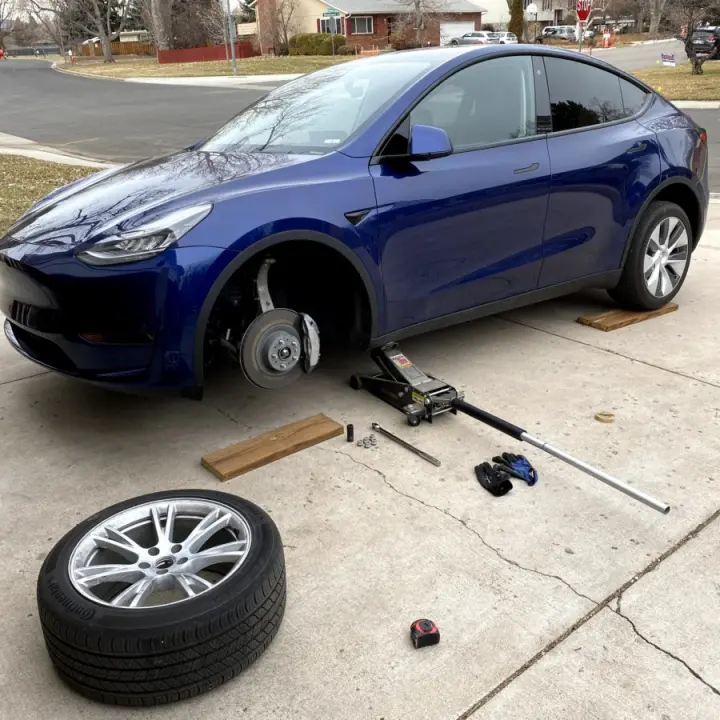
Yes, you can change a Tesla tire yourself with the right equipment. You need a Tesla-compatible jack pad (to protect the battery when lifting), a floor jack or scissor jack rated for at least 4,500 lbs, a 21 mm socket with a breaker bar or torque wrench, and a torque wrench set to 129 lb-ft for final tightening. Tesla does not include a jack or lug wrench with the vehicle, so these must be purchased separately. After any tire change, reset the TPMS through the touchscreen and drive for 10 to 15 minutes to allow the system to relearn sensor positions.
What Tires Should I Buy for My Tesla?
The tires you should buy for your Tesla depend on your wheel size, your local climate, and your driving priorities. For maximum range and cabin quiet, choose a T-marked OEM tire like the Continental ProContact RX or Michelin Primacy A/S. For year-round all-weather capability including light snow, choose the Michelin CrossClimate 2. For performance driving, choose the Michelin Pilot Sport All Season 4 or Goodyear ElectricDrive GT. For Canadian winters, a dedicated winter tire like the Michelin X-Ice Snow on a second set of wheels provides the safest grip below 7°C.
Are Run-Flat Tires a Good Option for the Tesla Model 3?
Run-flat tires are not a common or recommended option for the Tesla Model 3. Run-flat construction uses reinforced sidewalls that add weight, increase ride harshness, and reduce range more than standard XL tires. The Model 3's curb weight amplifies the stiffness of run-flat sidewalls, producing a noticeably rougher ride than standard tires. Most Model 3 owners who want flat-tire protection opt for a portable inflator and plug repair kit or an aftermarket compact spare tire kit instead.
The Takeaway
Fitting the right tires on a Tesla Model 3 starts with three numbers: your tire size from the door jamb sticker, the XL load index, and the speed rating for your trim. The 5x114.3 bolt pattern and 64.1 mm centre bore stay the same across every Model 3 ever built, which keeps replacement options wide open whether you stick with OEM or go aftermarket. The Continental ProContact RX matches the factory experience. The Michelin CrossClimate 2 handles all four seasons without a swap. The Michelin Pilot Sport All Season 4 gives the Performance trim the grip it can actually use. Canadian owners facing real winters should run dedicated winter tires from late October through April and swap back when temperatures climb above 7°C.
We carry Model 3 wheels, tires, TPMS sensors, and winter packages ready to ship across Canada and the United States. If you need help matching fitment to your specific trim and model year, reach out to us at Tesmods or call 437-800-2328.